
Making Space for Creative Education
MEET NIC HALL, FOUNDER AND EXECUTIVE DIRECTOR OF CHALK AND COMPASS
Art and design schools are places where people learn to pay attention: to materials, to images, to one another, and to possibilities that have not yet taken shape. Keeping those institutions strong requires a similar kind of attention. It means understanding what happens in a studio, what makes a creative community work, and how an institution’s decisions shape the conditions for learning.
For me, that work brings together a career in higher education, a practice as an artist, and research into the relationships between people, places, and institutions. It also prompted the founding of Chalk and Compass, a nonprofit consulting organization focused on the long-term vitality of art and design education.
I bring more than twenty years of experience in art and design higher education, including leadership in both enrollment management and academic affairs at the School of the Art Institute of Chicago and the Tyler School of Art and Architecture. In my varying roles, I worked across the questions that shape institutional life: who finds their way to an art school, how programs evolve, what students need, and how faculty and administrators turn ambitious ideas into workable structures. I continue to teach graduate research and thesis courses as I find it important to remain engaged with students and an academic community (and I deeply enjoy being in the classroom).
My education crosses several fields: a BFA in Metalsmithing, a master’s degree in Sustainable Design, and a PhD in Geography and Urban Studies. Those experiences inform an approach that moves between close observation and broader systems. A curriculum, an enrollment pattern, or a policy can be examined on its own, but I’m also interested in how those elements interact and whose experiences they make visible.
My doctoral research examined how urban universities’ community engagement strategies changed amid globalization, tracing the relationship between commitments to surrounding communities and institutional priorities. Over the years since, my ongoing research and creative practice turned toward cemeteries and other landscapes of grief, care, and memory.
Through my current research project, Mapping the Liminal, I approach cemeteries as spaces where intimate experiences meet public systems. My methods include spatial ethnography, GIS, archival research, drawing, painting, 3D scanning, and participatory mapping. Work associated with Graceland Cemetery in Chicago and a residency at Hospitalfield in Scotland offered settings for investigating how places hold memory and how people navigate loss. A related project, Landscapes of Impermanence, considers humanitarian cemeteries and the architecture of loss in times of displacement due to political and environmental influence.
The connections to institutional leadership are less distant than they might seem at first glance. Both bodies of work ask how spaces and systems embody values, how care becomes tangible, and what can disappear when an account of a place becomes too narrow. In my teaching, I help graduate students situate their practices within larger conversations, develop research questions, and consider the ethical and public stakes of their work.
Chalk and Compass grew from an observation made over years inside creative institutions: art schools often need outside support, yet finding support that understands their work can be difficult, if not impossible. I saw my own institutions and those of my peers confronting difficult questions about enrollment, resources, academic programs, assessment, and their futures. I also saw how much time leaders could spend explaining the fundamentals of creative education to consultants whose experience came from very different institutional settings and attempted to adapt solutions to structures they didn’t fit.
A program’s health cannot be understood through enrollment alone. Studio teaching, critique, specialized facilities, faculty practice, and interdisciplinary work all influence how an art school operates. Its contributions may extend through cultural work, community relationships, creative entrepreneurship, and forms of inquiry that conventional measures only partially capture. Effective consulting needs to understand these conditions well enough to ask better questions and help institutions make decisions they can carry forward.
Chalk and Compass offers support in academic planning, program review, assessment, enrollment strategy, research design, and institutional effectiveness. Its approach combines practical analysis with a commitment to the character and public value of creative education. The aim is to help institutions build the capacity to act: clearer priorities, useful tools, stronger processes, and plans that fit their people and resources.
The nonprofit structure is central to that purpose. I chose a model designed to create opportunities for philanthropic and grant support to help subsidize consulting, research, and shared educational resources. As funding becomes available, that support could lower costs for participating institutions and extend access to those with limited budgets. It is an ambition for greater accessibility, rather than a promise that every engagement is already grant-funded.
For me, the organization’s purpose is both practical and hopeful. Creative institutions need people who understand their pressures and believe their futures are worth working toward. Chalk and Compass brings those commitments together: careful research, institutional experience, and the conviction that art and design education deserves support shaped around the work it actually does.
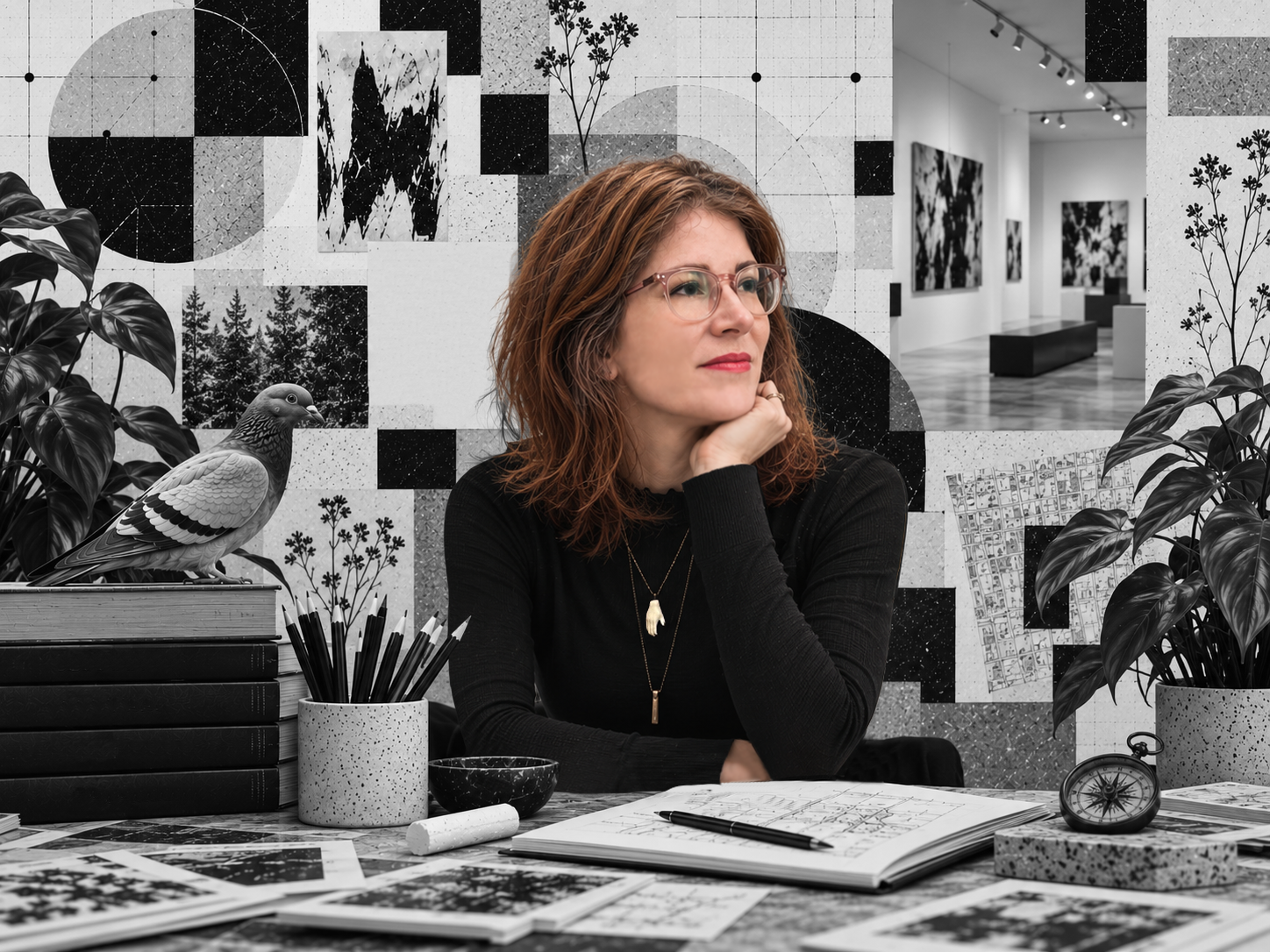
A CONVERSATION WITH NIC HALL
ROWAN ELLISE
Your background moves between art, geography, sustainable design, and higher education leadership. How do those experiences connect?
The connection is an interest in how things are made and how they work: objects, places, communities, institutions. Metalsmithing taught me to pay attention to materials and process. Sustainable design encouraged me to think about relationships and consequences. Geography gave me ways to ask how power, access, and belonging take shape in particular places.
In higher education, those questions become very tangible. Who can access an institution? What does it make possible? What do its structures support, and where do they create friction? I bring an artist’s curiosity to those questions, alongside two decades of experience working through them administratively.
What did your years in admissions and academic affairs teach you?
They taught me to look across the institution. Admissions provides a close view of what prospective students are hoping for and what makes an education feel possible—or out of reach. Academic affairs brings you into curriculum, teaching, resources, and the daily experience of being a student or faculty member.
Those conversations need to inform one another. Enrollment strategy is connected to academic planning. Student support is connected to retention. A promising new program needs both an intellectual purpose and the resources to sustain it. I enjoy helping people see those connections and finding a way forward together.
Your research and creative practice focus on cemeteries, grief, and memory. What draws you to those spaces?
Cemeteries bring very personal experiences into spaces shaped by collective decisions. They hold grief and memory, but they also reflect decisions about land, design, access, maintenance, and whose lives are recognized.
I’m interested in how care becomes visible in a landscape and how people form relationships with places that hold loss. That requires different ways of looking. A map can reveal a spatial pattern; an archive can illuminate a decision; drawing can slow down my attention; spending time in a place can reveal something none of those methods would capture alone.
How does that work shape your approach to consulting?
It reminds me to pay attention to what our tools allow us to see. Data is essential, but we have to ask what it represents, what it leaves out, and what else we need to understand.
At an art school, I want to look at the numbers and also understand the experience behind them. What are students making? How do faculty work together? What does a program contribute to the wider institution? The research helps me ask those questions carefully, and my administrative experience helps me turn what we learn into something useful.
Why did you found Chalk and Compass?
I kept seeing art schools that needed support and had very limited places to find it. Their leaders were carrying enormous responsibilities, often with small teams. They needed help with planning, assessment, enrollment, and difficult institutional decisions, but outside consulting could be expensive and require a great deal of explanation before the work could really begin. As I first began this work, I saw the immediate relief from clients who acknowledged how wonderful it was to not have to explain our field and that I had the vernacular to communicate with our creative communities.
I saw a need for a consulting organization that understands creative education from the inside. I wanted institutions to be able to start with the question they need help answering, with someone who understands why critique matters, why studio resources matter, and why the value of an art school reaches beyond a single measure.
What should consultants understand about art and design schools?
They need to understand how learning happens here. Making, experimentation, critique, and sustained individual inquiry shape the curriculum and the resources it requires. Faculty bring creative practices into their teaching, and students often move across disciplinary boundaries.
They also need to understand what people are trying to protect. An institution’s character matters. Good planning helps people make choices about change while staying connected to the educational purpose that brought them there.
Why was a nonprofit model important to you?
Accessibility had to be part of the organization’s structure. If we want to support institutions with limited resources, we need to develop ways to make that support more affordable.
The nonprofit model creates opportunities to seek grants and philanthropic support that can help subsidize projects and fund research, tools, and learning opportunities for the field. Those opportunities depend on securing funding, but they give us a path toward extending access. I want the work to benefit individual institutions but also contribute to a strengthening of our art schools more broadly. Artists and designers shape our world, we need to protect the vitality of the institutions shaping them.
What does working with Chalk and Compass look like?
It starts with listening and being clear about the question. Sometimes an institution needs a defined project, such as a program review or an assessment framework. Sometimes they need help making sense of several concerns that have become tangled together. Sometimes there’s a big idea and an institution needs the research and data to support it through approvals and implementation. It’s a very human experience.
From there, we work toward something people can use: a set of priorities, a practical process, a clearer account of the evidence, or a plan with realistic next steps. I want people to leave with greater clarity and capacity, including tools they can continue using after the engagement ends. It often feels like detective work and it’s always exciting to see the impact of the work.
How do you see AI fitting into your work and the future of creative education?
I see AI as a useful resource. It can help organize information, explore possibilities, and make certain tasks more manageable. Used thoughtfully, it can create more room for the parts of our work that require time and attention.
But so much of this work is necessarily a deeply human experience. Understanding an institution means listening to people, building trust, recognizing histories, and working through decisions that affect lives. Creative education involves vulnerability, experimentation, relationships, and the experience of making meaning together. Those things require human presence and judgment.
I’m interested in what AI can help us do, concerned about it’s broader environmental and social impact, and hopeful it remains in its place as merely a tool. The responsibility for asking good questions, interpreting what we learn, and deciding how to act stays with us.
What do you hope people find in the Chalk and Compass community?
Useful ideas, generous colleagues, and a little room to think. People working in creative institutions are often solving related problems in isolation. There is real value in having a place to compare notes, ask an unfinished question, and learn from someone who deeply understands and cares about the context.
I hope this becomes a community where people feel supported in the practical work of keeping creative education strong and with room for imagination.